Social Entrepreneurship and Innovation
Enterprise aimed at a problem, not just a profit.
In 1976 an economics professor in Bangladesh lent twenty-seven dollars from his own pocket to forty-two village women who made bamboo stools. The banks had said the poor would never repay. They repaid every cent. Muhammad Yunus turned that loan into a bank, and the bank into a Nobel Peace Prize.
Can doing good and making money pull in the same direction for long?
Charity treats the symptom. Enterprise can change the system, or pretend to.
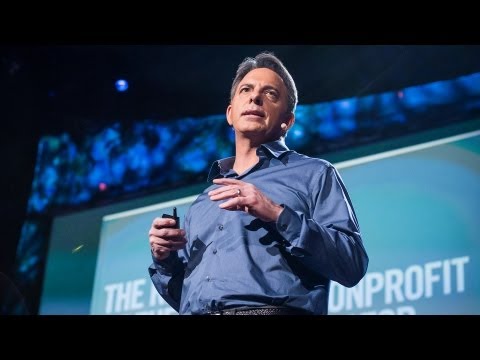
Watch it in four minutes.
What it is, in plain words.
- 10 lessons
- 10 modules, each with a test
- 4 people explained
- 50 works, places and ideas explained
- 12 question final exam
Social entrepreneurship uses the methods of business to tackle social problems. The measure of success is the change produced, with income as the means to keep going instead of the goal.
The typical social enterprise starts from a problem that charity and government have not solved, and looks for a model that can pay its own way. Microfinance, fair trade and low-cost eye surgery are well-known examples. The discipline lies in evidence. Good intentions are common and results are rare, so serious ventures measure their effect and change course when it disappoints. The field has critics, who point out that market solutions can leave the causes of a problem untouched. The honest position is that enterprise is one tool among several.
Five ideas to hold
An organization that trades in order to achieve a social or environmental aim.
A social enterprise is a business whose main purpose is a social or environmental goal. It earns income by selling goods or services and puts most of its profit back into the mission. It sits between a charity, which depends on donations, and an ordinary firm, which exists to pay its owners. A cafe that trains and employs people leaving prison, and a company that sells affordable solar lamps, are both examples.
Assessing the actual change an organization produces, not just its activity.
Good intentions are not results. Impact measurement asks what changed because of the work, compared with what would have happened anyway. Counting meals served measures activity. Showing that children are healthier a year later measures impact. The strongest evidence comes from randomized trials, which transformed development economics and won Abhijit Banerjee, Esther Duflo and Michael Kremer a Nobel Prize in 2019. Careful measurement often finds that popular programs achieve less than hoped.
The ability of a solution to grow and reach many more people without failing.
A program that works in one village is a pilot. Scalability is whether it still works for a million people. Growth strains quality, costs and management, and many proven models fail at this stage. Some scale by expanding the organization. Others spread through franchising, through open sharing of the method, or by persuading a government to adopt it. The cheapest route is often the last, since governments already reach everyone.
Small loans and financial services for people too poor for ordinary banks.
Microfinance provides small loans, savings accounts and insurance to people whom banks ignore. Muhammad Yunus began lending to village women in Bangladesh in the 1970s, relying on group responsibility where borrowers had no collateral, and repayment rates were high. Early claims that it would end poverty have not held up. Careful studies find modest benefits: it helps families manage risk and smooth their income, and it seldom transforms it. Savings and insurance may matter more than credit.
A clear account of how an organization's activities are expected to lead to its goals.
A theory of change is a map from what you do to the result you want, with each step written out. We train teachers, so teaching improves, so children learn more, so they earn more as adults. Writing it down exposes the assumptions at each link, and those are where programs fail. It also tells you what to measure and when. Funders increasingly require one, because a goal with no causal path is a wish.
Five moments that made the field
- 1844The Rochdale Pioneers open a shop owned by its customers.
- 1976Muhammad Yunus begins the lending that becomes Grameen Bank.
- 1980Bill Drayton founds Ashoka to back social entrepreneurs.
- 2006Yunus and Grameen Bank receive the Nobel Peace Prize.
- 2007The first companies are certified as B Corporations.
Still argued about
Does microcredit really lift people out of poverty?
Should a social enterprise make profits for investors?
Can markets fix problems that markets helped create?


Three facts, one myth, one dare.
Doing good and doing business are opposites.
Tap to turn it overSome of the most durable solutions pay their own way, and so do not depend on donations.
Name one problem on your street that a small business could fix.
10 sections, 10 lessons.
- 1
The briefing
Social enterprise · Impact measurement · Scalability · Microfinance
- 2
Introduction to Social Entrepreneurship
Defining Social Entrepreneurship · Historical Context and Evolution · Theories and Models
- 3
The Role of Innovation in Social Entrepreneurship
Innovation Processes and Strategies · Types of Social Innovation · Scaling Social Impact
- 4
Identifying and Addressing Social Challenges
Understanding Social Problems · Needs Assessment and Opportunity Recognition · Design Thinking and Human-Centered Design
- 5
Building Sustainable Social Ventures
Business Models for Social Enterprises · Funding and Financial Sustainability · Measuring Social Impact
- 6
Social Entrepreneurship Ecosystem
Key Stakeholders and Their Roles · Partnerships and Collaborations · Policy Environment and Institutional Support
- 7
Challenges and Critiques of Social Entrepreneurship
Ethical Considerations · Critiques of Social Entrepreneurship · Overcoming Barriers to Success
- 8
Case Studies and Success Stories
Global Innovators · Local Solutions with Global Potential · Lessons Learned
- 9
Future Directions in Social Entrepreneurship and Innovation
Emerging Trends · Technology and Social Entrepreneurship · Creating a Culture of Social Innovation
- 10
Conclusion
The Power of Social Entrepreneurship · Call to Action
The typical social enterprise starts from a problem that charity and government have not solved, and looks for a model that can pay its own way. Microfinance, fair trade and low-cost eye surgery are well-known examples. The discipline lies in evidence. Good intentions are common and results are rare, so serious ventures measure their effect and change course when it disappoints. The field has critics, who point out that market solutions can leave the causes of a problem untouched. The honest position is that enterprise is one tool among several.
People to know.
Microcredit and Grameen Bank
Founded Ashoka
Reformed a whole system of care
Founded BRAC
Books to read.
- Banker to the PoorMuhammad Yunus
- How to Change the WorldDavid Bornstein
- Poor EconomicsBanerjee and Duflo
A question from its final exam.
A social enterprise is a business that
4 people, each one explained.
Twelve of them are below. In the Atlas every name, work and place in the text opens a short account of who or what it is.
 Ashoka c. 304 BC to c. 232 BC
Mauryan emperor from 268 to 232 BCE Muhammad Yunus born 1940
Bangladeshi banker, Nobel Peace Prize recipient and the former Chief Adviser of Bangladesh Florence Nightingale 1820 to 1910
English social reformer, statistician, and founder of modern nursing Saras Sarasvathy born 1959
Ph.D. Carnegie Mellon University 1998


Descriptions and dates from Wikidata. Portraits from Wikimedia Commons, each linked to its author and license.
What a full picture of the field includes.
Every chapter was checked against a list of the names and terms a student of the subject should meet. These are the most important ones the book itself does not name.
Scholar who wrote the standard definition of social entrepreneurship in 1998.
The nonprofit fund founded by Jacqueline Novogratz in 2001 to invest "patient capital" in firms that serve the poor.

Strategist who argued that companies can profit and reduce poverty by serving the billions at the "bottom of the pyramid".
A map of how an organization's activities are expected to lead, step by step, to the result it wants.
A contract in which investors pay for a social program and the government repays them only if it works.
The Bangladeshi organization founded by Fazle Hasan Abed in 1972, among the largest nonprofits in the world.
The mobile money service launched in Kenya in 2007 that let people without bank accounts send and save money by phone.
The Indian hospital network that performs cataract surgery at very large scale, with paying patients covering the cost of free ones.
A federation of worker-owned cooperatives in the Basque Country, founded in 1956.
A charity that sends cash straight to poor households and tests the results with randomized trials.
An approach in which organizations from different sectors commit to a shared agenda and shared measures.
When the need to earn money pulls a social enterprise away from its purpose.
More of the field
20 more people and ideas a student of this subject should meet. In the Atlas each one opens a card with facts, dates and a portrait.
Elinor OstromElon MuskHeinrich Christian Friedrich SchumacherJeffrey SachsJoseph SchumpeterKarl PolanyiMichael W. YoungPaul Light (psychologist)Phil CollinsPierre OmidyarAmulCreative CommonsGrameen DanoneGreen beltKhan AcademyPartners In HealthSalvation ArmyStanford Social Innovation ReviewSustainable Development GoalsTeach for America
Read Social Entrepreneurship and Innovation.
Free. The film, the briefing and the first section open without an account.