Social Sciences
The sciences of us: why groups behave as no member intends.
In 1968 a psychologist staged emergencies in front of strangers. Alone, most people helped. In a group, most sat still, each waiting for someone else to move. Nobody in the room was a bad person. The room itself had a behavior. That discovery is the whole premise of social science.
How much of what you believe did you choose, and how much came from where you were born?
Society is what happens when everyone responds to what they think everyone else will do.
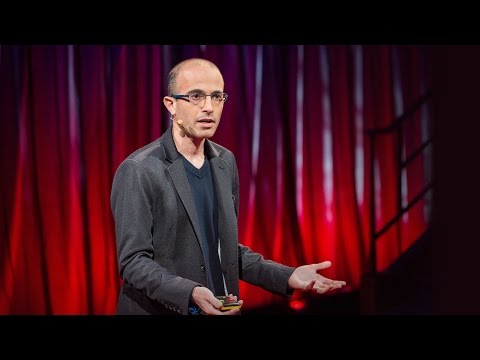
Watch it in four minutes.
What it is, in plain words.
- 14 lessons
- 5 modules, each with a test
- 48 people explained
- 65 works, places and ideas explained
- 12 question final exam
The social sciences study people in groups using the methods of science as far as people allow. Psychology looks at the individual mind. Sociology looks at institutions, classes and norms. Anthropology looks at whole ways of life. Economics looks at how people respond to scarcity and incentives.
Their shared discovery is that behaviour which feels freely chosen follows patterns. Where you were born predicts your beliefs, income and lifespan better than most personal traits do. The difficulty is that people cannot be experimented on like chemicals, and they change their behaviour when they are studied. So social science leans on careful comparison, large surveys and natural experiments, and its findings come with wider margins of doubt than physics allows.
Five ideas to hold
An unwritten rule about how to behave. Norms are enforced by approval and embarrassment more than by law.
Nobody passed a law saying you must face the door in an elevator, yet nearly everyone does. Norms are rules like that, learned by watching and enforced by a raised eyebrow. They differ by place and change over time. Smoking indoors went from normal to unthinkable within a generation. Sociologists study norms by observing what happens when one is broken. The discomfort people feel shows how much of daily life runs on agreements nobody wrote down.
A lasting pattern that organizes social life, such as the family, the market or the state.
An institution is a pattern that outlives the people in it. The family, the school, the market, the court and the church all shape behavior by setting roles and expectations. A new teacher steps into a role that existed before them and will continue after. Institutions make life predictable, and they also lock in advantages. To explain why two countries with similar resources end up rich and poor, economists now look first at their institutions.
The process by which people absorb the habits and beliefs of their society, mostly without noticing.
Children are not born knowing how to queue, what to eat or what counts as rude. They learn it from family, then school, friends and media, until the lessons feel like instinct. Socialization continues in adulthood. A new job, a new country or a military unit each teach a way of being. The idea explains why people raised in different places can find each other's ordinary habits strange, and why changing a society's values takes generations.
Anything that makes an action more or less attractive. Change the incentive and behaviour usually follows.
People respond to rewards and costs, including ones nobody intended. When British rulers in colonial India paid a bounty for dead cobras, the story goes, people began breeding cobras. A fine for late pickup at a daycare can increase lateness, because parents treat it as a price. Incentives need not be money. Status, guilt and convenience all count. Before judging a behavior, ask what the situation rewards.
Two things moving together does not show that one causes the other. Sorting this out is the central problem of social research.
Ice cream sales and drownings rise together, but ice cream does not cause drowning. Summer causes both. A hidden third factor like that is called a confounder. Sometimes the arrow runs backward: do police cause crime, or does crime bring police? The surest way to settle cause is an experiment in which chance decides who gets the treatment. Where that is impossible, researchers look for natural experiments and compare groups that are alike in every way but one.
Five moments that made the field
- 1776Adam Smith publishes The Wealth of Nations.
- 1838Auguste Comte coins the word sociology.
- 1867Marx publishes the first volume of Capital.
- 1897Durkheim shows in Suicide that a private act follows social patterns.
- 1905Weber publishes The Protestant Ethic and the Spirit of Capitalism.
Still argued about
How much do people choose their lives, and how much does society choose for them?
Can the study of people ever be a science like physics?
How many well-known findings hold up when the study is repeated?


Three facts, one myth, one dare.
Common sense already tells us how people behave.
Tap to turn it overCommon sense says both "birds of a feather flock together" and "opposites attract". Social science tests which holds, and when.
Watch a queue for five minutes and write down three unwritten rules.
5 sections, 14 lessons.
- 1
The briefing
Norm · Institution · Socialization · Incentive
- 2
Psychology
Introduction to Psychology · Definition and Scope of Psychology · Historical Development of Psychology · Importance and Applications of Psychology
- 3
Sociology
Introduction to Sociology · Sociological Perspectives · Research Methods in Sociology · Social Institutions
- 4
Anthropology
Introduction to Anthropology · Subfields of Anthropology · Historical Development of Anthropology · Biological Anthropology
- 5
Economics
Introduction to Economics · Definition and Scope of Economics · Schools of Economic Thought · Economic Systems
Their shared discovery is that behaviour which feels freely chosen follows patterns. Where you were born predicts your beliefs, income and lifespan better than most personal traits do. The difficulty is that people cannot be experimented on like chemicals, and they change their behaviour when they are studied. So social science leans on careful comparison, large surveys and natural experiments, and its findings come with wider margins of doubt than physics allows.
People to know.
Founder of modern sociology
Studied authority, bureaucracy and belief
Brought anthropology to the public
The Wealth of Nations
Pioneer of empirical sociology
Books to read.
- The Protestant Ethic and the Spirit of CapitalismMax Weber
- Bowling AloneRobert Putnam
- The Presentation of Self in Everyday LifeErving Goffman
A question from its final exam.
Sociology is primarily the study of
48 people, each one explained.
Twelve of them are below. In the Atlas every name, work and place in the text opens a short account of who or what it is.
 Sigmund Freud 1856 to 1939
Austrian psychiatrist and founder of psychoanalysis Carl Rogers 1902 to 1987
American psychologist Erik Erikson 1902 to 1994
American German-born psychoanalyst & essayist Jean Piaget 1896 to 1980
Swiss psychologist, biologist, logician, philosopher and academic John B. Watson 1878 to 1958
American psychologist (1878 Wilhelm Wundt 1832 to 1920
German physician, physiologist, philosopher and professor Abraham Maslow 1908 to 1970
American psychologist David Ricardo 1772 to 1823
British banker, classical economist and politician Hugo Münsterberg 1863 to 1916
German-American psychologist Karl Marx 1818 to 1883
German-born philosopher William James 1842 to 1910
American philosopher, psychologist, and pragmatist- Aaron Antonovsky 1923 to 1994
Israeli American sociologist


Descriptions and dates from Wikidata. Portraits from Wikimedia Commons, each linked to its author and license.
What a full picture of the field includes.
Every chapter was checked against a list of the names and terms a student of the subject should meet. These are the most important ones the book itself does not name.

French sociologist who showed that taste, manners and education act as cultural capital, passing advantage from parents to children.

French thinker who studied prisons, clinics and asylums and argued that power works through knowledge and the categories we use for people.
Durkheim's word for the state in which a society's norms break down and people lose their sense of what is expected of them.

German sociologist who studied small groups, the stranger, money and the way city life changes the mind.
Psychologist whose line experiments of the 1950s showed that many people will deny what their own eyes see to agree with a group.

Sociologist who gave us the terms self-fulfilling prophecy, role model and unintended consequences.

German philosopher of the public sphere, the space where citizens argue as equals, and of what makes that argument fair.

Often called the first woman sociologist. In the 1830s she studied American society and wrote early rules for observing one.

Political economist who showed that communities can manage shared resources themselves. In 2009 she became the first woman to win the Nobel in economics.
Kimberlé Crenshaw's term for the way race, sex, class and other positions combine, so that a person's experience is not the sum of each alone.
More of the field
17 more people and ideas a student of this subject should meet. In the Atlas each one opens a card with facts, dates and a portrait.
Alexis de TocquevilleAnthony GiddensClaude Lévi-StraussClifford GeertzDaniel KahnemanFerdinand TönniesFrantz FanonFriedrich HayekHarold GarfinkelImmanuel WallersteinJoseph SchumpeterJudith ButlerKarl PolanyiLeon FestingerNiklas LuhmannPhilip ZimbardoRichard Sennett
Read Social Sciences.
Free. The film, the briefing and the first section open without an account.