Public Speaking and Rhetoric
Moving a room with nothing but words.
On 28 August 1963 a preacher stood before a quarter of a million people with a prepared speech. Near the end a singer behind him called out, "Tell them about the dream, Martin." He set the pages aside. What followed was improvised. The most famous speech of the century was the part that was not written down.
Why do some true things fail to persuade, and some false things succeed?
People do not remember what you said. They remember how the room felt.
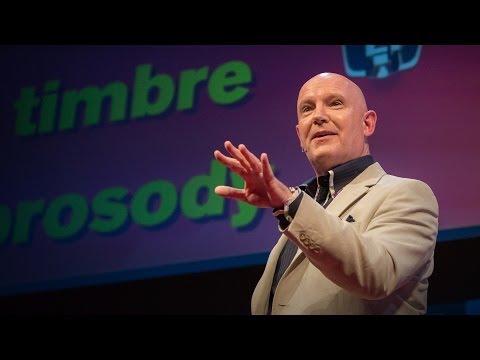
Watch it in four minutes.
What it is, in plain words.
- 10 lessons
- 10 modules, each with a test
- 6 people explained
- 40 works, places and ideas explained
- 12 question final exam
Rhetoric is the art of persuasion. Public speaking is its most visible use. Both were once the core of education, on the view that a citizen who cannot argue a case cannot take part in public life.
Aristotle named three ways to persuade: the character of the speaker, the emotions of the audience and the logic of the argument. An effective speech uses all three. It also has a shape, with an opening that earns attention, a small number of points in clear order, and an ending that tells people what to do or remember. Delivery matters as much as content: pace, pauses, eye contact. Nerves are normal and fade with preparation. The surest way to speak well is to know exactly what you want the audience to leave with.
Five ideas to hold
Persuasion through the credibility and character of the speaker.
Ethos is persuasion through the character of the speaker. Audiences ask, before anything else, whether this person can be trusted. Aristotle said ethos comes from good sense, good character and goodwill toward the audience. It is built by showing knowledge, being fair to the other side and admitting what you do not know. A doctor has ethos on medicine and not automatically on economics. Once it is lost, no argument recovers it.
Persuasion through the emotions of the audience.
Pathos is persuasion through feeling. People act when they are moved, not only when they are convinced. A statistic about hunger informs. The story of one hungry child persuades. Pathos works through vivid detail, story and language that matches the mood of the room. It is not opposed to reason. Aristotle thought that feeling the right emotion about the right thing was part of judging well. It turns into manipulation when it replaces evidence.
Persuasion through reasoning and evidence.
Logos is the argument itself: claims, reasons and evidence in an order the audience can follow. In speech it must be simpler than on the page, because listeners cannot go back and reread. That means few points, concrete examples and one clear line of reasoning. Speakers rarely state every step. They leave out a premise the audience already holds, and listeners supply it. Aristotle called this compressed argument an enthymeme.
A question asked for effect, with no answer expected, to make the audience think.
A rhetorical question is asked for effect and expects no reply. "Are we going to let this happen?" makes the listener answer silently, and people believe their own answers more than a speaker's assertions. It can also introduce a point: "So what should we do? Three things." Used too often it sounds like a lecture. Used once at the right moment, it changes an audience from passive to engaged.
Telling listeners where you are in the speech so that they can follow the structure.
A reader can see headings and paragraphs. A listener sees nothing, so a speaker must say the structure out loud. "I have three points. First." "That is the problem. Now the solution." These phrases are signposts. They feel repetitive to the speaker and reassuring to the audience. The old advice holds: tell them what you are going to tell them, tell them, then tell them what you told them.
Five moments that made the field
- c. 335 BCAristotle writes the Rhetoric.
- 55 BCCicero writes On the Orator.
- c. 95Quintilian publishes his training manual for speakers.
- 1863Lincoln delivers the Gettysburg Address in about 270 words.
- 1963Martin Luther King Jr. delivers the I Have a Dream speech.
Still argued about
Where does persuasion end and manipulation begin?
Does style matter more than substance?
Has social media changed what persuades people?


Three facts, one myth, one dare.
Great speakers are born.
Tap to turn it overDemosthenes, the greatest orator of Athens, began with a speech impediment and trained it away.
Record yourself explaining something for one minute. Listen once. Do it again.
10 sections, 10 lessons.
- 1
The briefing
Ethos · Pathos · Logos · Rhetorical question
- 2
Foundations of Rhetoric and Public Speaking
The History and Evolution of Rhetoric · Key Concepts in Rhetoric · The Role of Public Speaking Today
- 3
Crafting Your Message
Audience Analysis · Structuring Your Speech · Developing Your Argument
- 4
Language and Style
The Power of Language · Stylistic Devices and Figures of Speech · Tone and Register
- 5
Verbal and Non-Verbal Communication
Vocal Delivery Techniques · Body Language · Managing Stage Presence
- 6
Overcoming Public Speaking Anxiety
Understanding Speaking Anxiety · Strategies for Managing Anxiety · Practice and Feedback
- 7
Persuasive Speaking and Argumentation
Principles of Persuasion · Types of Persuasive Speeches · Fallacies in Argumentation
- 8
Special Occasion Speeches and Different Formats
Ceremonial Speaking · Impromptu Speaking · Debate and Deliberation
- 9
The Use of Technology in Public Speaking
Visual Aids and Presentations · Online and Virtual Presentations · Social Media and Public Speaking
- 10
Conclusion
The Continuous Journey of Improvement · The Impact of Effective Rhetoric
Aristotle named three ways to persuade: the character of the speaker, the emotions of the audience and the logic of the argument. An effective speech uses all three. It also has a shape, with an opening that earns attention, a small number of points in clear order, and an ending that tells people what to do or remember. Delivery matters as much as content: pace, pauses, eye contact. Nerves are normal and fade with preparation. The surest way to speak well is to know exactly what you want the audience to leave with.
People to know.
Ethos, pathos, logos
The complete orator
Trained by speaking over the sea
Preacher of the civil rights movement
Abolitionist orator
Books to read.
- RhetoricAristotle
- Thank You for ArguingJay Heinrichs
- Talk Like TEDCarmine Gallo
A question from its final exam.
Ethos is an appeal to
6 people, each one explained.
Twelve of them are below. In the Atlas every name, work and place in the text opens a short account of who or what it is.
 Aristotle c. 384 BC to c. 322 BC
Greek philosopher Cicero c. 107 BC to c. 43 BC
Roman statesman, lawyer, orator, and philosopher Martin Luther King Jr 1929 to 1968
American Baptist minister and civil rights leader Plato c. 429 BC to c. 349 BC
4th-century BCE Greek philosopher Robert Cialdini born 1945
American psychologist Winston Churchill 1874 to 1965
British statesman, soldier and writer


Descriptions and dates from Wikidata. Portraits from Wikimedia Commons, each linked to its author and license.
What a full picture of the field includes.
Every chapter was checked against a list of the names and terms a student of the subject should meet. These are the most important ones the book itself does not name.

Athenian teacher of rhetoric and a rival of Plato, who trained citizens to speak well on public affairs.
The Greek idea of the right moment. A good speaker says the fitting thing at the fitting time.

The formerly enslaved American orator whose 1852 speech asked what the Fourth of July means to a slave.
The speech for the Athenian war dead, as reported by Thucydides, that defined what Athens stood for.
Philosopher whose model breaks an argument into claim, grounds and warrant, with backing, qualifier and rebuttal.
A five-step pattern for persuasive speeches: attention, need, satisfaction, visualization, action.
Theorist who held that persuasion works by identification. People are moved by those they feel are like them.

Formerly enslaved speaker for abolition and women's rights, remembered for her 1851 speech in Akron, Ohio.
Lloyd Bitzer's idea that every speech answers a particular problem, audience and set of limits.
Repeating the same words at the start of successive sentences, as in "I have a dream".

Leader of the British suffragettes, whose 1913 speech "Freedom or Death" defended militant protest.
More of the field
16 more people and ideas a student of this subject should meet. In the Atlas each one opens a card with facts, dates and a portrait.
Al-JahizAugustine of HippoBarbara JordanChief JosephFranklin D. RooseveltGeorge WashingtonHan FeiJawaharlal NehruJohn F. KennedyLou GehrigMahatma GandhiMalala YousafzaiMargaret ThatcherNelson MandelaPatrick HenrySanskrit
Read Public Speaking and Rhetoric.
Free. The film, the briefing and the first section open without an account.