Ethics and Morality
What we owe each other, and how to decide when the rules run out.
A runaway trolley is about to kill five people. You can pull a lever and send it down a side track, where it will kill one. Most people pull. Now change one detail: you must push a man off a bridge to stop it. Same numbers. Most people refuse. Ethics begins in the gap between those two answers.
Is an act right because of what it causes, or because of what it is?
Nobody thinks they are the villain. That is why ethics needs methods and not just feelings.
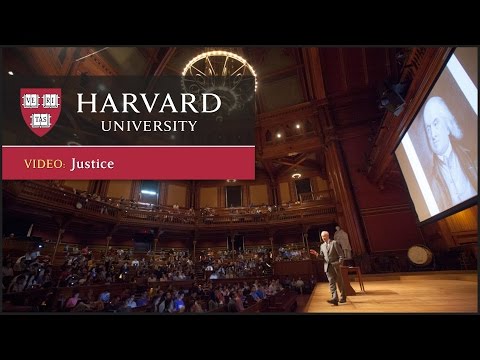
Watch it in four minutes.
What it is, in plain words.
- 18 lessons
- 12 modules, each with a test
- 11 people explained
- 128 works, places and ideas explained
- 12 question final exam
Ethics is the study of how we ought to act and what kind of people we ought to be. It deals in reasons, not just feelings. When two people disagree about right and wrong, ethics is the attempt to work out who has the better argument.
Three families of theory dominate. Consequentialists judge an act by its results. Deontologists hold that some acts are required or forbidden whatever the results. Virtue ethicists ask what a person of good character would do. Each captures something the others miss, and hard cases are hard because they pull against each other. Applied ethics takes these tools to medicine, business, technology and war. The working skill is to state your principle and then test it against a case where it hurts.
Five ideas to hold
The view that the right act is the one with the best outcomes. Utilitarianism is its best-known form.
Consequentialism judges actions by what they bring about. Its best-known version, utilitarianism, was set out by Jeremy Bentham and John Stuart Mill: act so as to produce the greatest happiness for the greatest number. The appeal is plain. It treats everyone's welfare as counting equally. The difficulty is equally plain. It seems to permit harming one innocent person if enough others benefit, and it asks you to predict results that nobody can know.
The view that duties and rights set limits on what may be done, even for a good result.
Deontology, from the Greek for duty, holds that some acts are right or wrong in themselves. Immanuel Kant argued that you should act only on a rule you could will everyone to follow, and that people must never be used merely as tools for someone else's ends. On this view, lying is wrong even when it would produce a good result. Critics say the theory is too rigid. Its defenders reply that rights mean nothing if they give way whenever the numbers are large.
A settled trait of character, such as courage or honesty, built by practice until it is second nature.
Virtue ethics asks not "what should I do?" but "what kind of person should I be?" Aristotle held that virtues such as courage, honesty and generosity are habits built by practice, the way a musician builds skill. Each sits between two failings. Courage lies between cowardice and recklessness. A person of good character sees what a situation calls for without consulting a rulebook. The approach was revived in the twentieth century after long neglect.
A situation where every available choice breaks an obligation. It reveals which principles a person ranks highest.
In the trolley problem, a runaway tram will kill five people unless you pull a lever that sends it down a side track, where it will kill one. Most people say pull. Change the case so that you must push a large man off a bridge to stop the tram, and most say no, though the numbers are identical. Dilemmas like this are tools. They isolate one moral factor at a time and reveal principles we hold without knowing it.
Facts about how the world is do not by themselves tell us how it should be. A value has to be added.
David Hume noticed that writers on morals slide from statements about what is to statements about what ought to be, with no explanation of how they got there. That humans are naturally aggressive does not show that aggression is good. That something is traditional does not show that it is right. To reach an "ought" you need at least one premise about value. The observation is a standing warning against arguments that appeal to nature or custom alone.
Five moments that made the field
- c. 340 BCAristotle writes the Nicomachean Ethics on character and the good life.
- 1785Kant publishes the Groundwork and the idea of duty.
- 1863Mill publishes Utilitarianism.
- 1947The Nuremberg Code sets rules for research on people.
- 1971Rawls publishes A Theory of Justice.
Still argued about
Do the ends ever justify the means?
How much do we owe to distant strangers and to people not yet born?
Do animals have moral rights?


Three facts, one myth, one dare.
Ethics is just opinion.
Tap to turn it overDisagreement does not make every answer equally good. Moral claims can be argued for, and some arguments are better.
Next time you judge someone, state the principle you are using, then test it on yourself.
12 sections, 18 lessons.
- 1
The briefing
Consequentialism · Deontology · Virtue · Moral dilemma
- 2
Introduction to Ethics and Morality
Definition and Scope of Ethics · Importance of Ethics in Society · Relationship between Ethics and Morality
- 3
Ethical Theories
Utilitarianism · Deontological Ethics · Virtue Ethics · Ethics of Care
- 4
Moral Philosophy
Metaethics · Normative Ethics · Applied Ethics · Descriptive Ethics
- 5
Ethical Dilemmas and Decision Making
Ethical Decision-Making Models · Moral Reasoning · Ethical Relativism vs. Ethical Absolutism
- 6
Professional Ethics
Medical Ethics · Business Ethics · Legal Ethics · Engineering Ethics
- 7
Bioethics
Issues in Reproductive Ethics · End-of-Life Ethics · Genetic Engineering and Ethics · Research Ethics
- 8
Environmental Ethics
Anthropocentrism vs. Ecocentrism · Conservation Ethics · Animal Rights and Environmentalism · Sustainability and Ethical Consumption
- 9
Political Ethics
Ethics in Governance · Corruption and Political Morality · Ethics in International Relations · Human Rights and Global Justice
- 10
Ethical Leadership
Traits of Ethical Leaders · Ethical Decision Making in Leadership
- 11
Religious and Cultural Perspectives on Ethics
Ethical Teachings in Major Religions · Cultural Variations in Moral Values · Secular vs. Religious Ethics
- 12
Ethical Challenges in the Digital Age
Privacy and Data Ethics · Artificial Intelligence and Ethics · Cybersecurity and Ethical Hacking · Digital Divide and Ethical Access to Technology
Three families of theory dominate. Consequentialists judge an act by its results. Deontologists hold that some acts are required or forbidden whatever the results. Virtue ethicists ask what a person of good character would do. Each captures something the others miss, and hard cases are hard because they pull against each other. Applied ethics takes these tools to medicine, business, technology and war. The working skill is to state your principle and then test it against a case where it hurts.
People to know.
Virtue as a trained habit
The categorical imperative
Utilitarianism and liberty
Posed the trolley problem
Applied ethics and effective giving
Books to read.
- Nicomachean EthicsAristotle
- Groundwork of the Metaphysics of MoralsImmanuel Kant
- JusticeMichael Sandel
- The Righteous MindJonathan Haidt
A question from its final exam.
Deontology judges actions mainly by
11 people, each one explained.
Twelve of them are below. In the Atlas every name, work and place in the text opens a short account of who or what it is.
 Aristotle c. 384 BC to c. 322 BC
Greek philosopher Immanuel Kant 1724 to 1804
German philosopher Alasdair MacIntyre 1929 to 2025
Scottish-American philosopher Carol Gilligan born 1936
American feminist, ethicist, and psychologist Jeremy Bentham 1748 to 1832
British philosopher, jurist, and social reformer Jesus Christ c. 6 BC to 30
Central figure of Christianity (c. 6 or 4 BC – AD 30 or 33) John Stuart Mill 1806 to 1873
British philosopher and political economist Martha Nussbaum born 1947
American philosopher Muhammad 571 to 632
Arabian political leader and the founder of Islam Nel Noddings 1929 to 2022
American philosopher Siddhartha Gautama c. 501 BC to c. 501 BC
Indian philosopher and the founder of Buddhism


Descriptions and dates from Wikidata. Portraits from Wikimedia Commons, each linked to its author and license.
What a full picture of the field includes.
Every chapter was checked against a list of the names and terms a student of the subject should meet. These are the most important ones the book itself does not name.

German philosopher who asked where our values come from and argued that much of morality began as the resentment of the weak.

Theologian who developed natural law: the view that right and wrong can be read by reason from human nature.
Psychologist who described stages of moral reasoning, from avoiding punishment to acting on principle.
Rawls's test for a fair rule: choose it without knowing whether you will be rich or poor, strong or weak.
The puzzle, raised by Thomas Nagel and Bernard Williams, that we judge people for results they did not control.
Plato's question: is something good because the gods command it, or do they command it because it is good?

Philosopher whose 1958 essay revived virtue ethics. She also gave the word consequentialism its name.

Philosopher who defended a minimal state and individual rights against redistribution, in answer to Rawls.
The principle that an act with a bad side effect may be allowed if the harm is foreseen but not intended, and is outweighed by the good.

Philosopher of the capabilities approach, which judges a society by what each person is actually able to do and to be.

Philosopher who argued that personal identity matters less than we think and who posed hard questions about future generations.
A southern African ethic often put as "a person is a person through other people". It grounds dignity in community.
More of the field
18 more people and ideas a student of this subject should meet. In the Atlas each one opens a card with facts, dates and a portrait.
Christine KorsgaardEmmanuel LevinasHannah ArendtHenry David ThoreauHenry SidgwickJean-Jacques RousseauJean-Paul SartreJohn LockeJürgen HabermasKwame Anthony AppiahLaoziMahatma GandhiMenciusMoziPlatoSocratesSøren KierkegaardThomas Hobbes
Read Ethics and Morality.
Free. The film, the briefing and the first section open without an account.